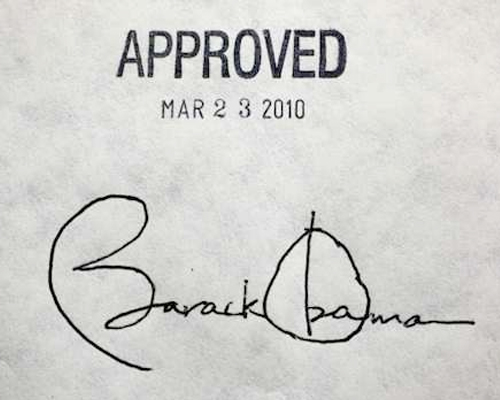
Senator Barack Obama at Woodrow Wilson Center on Terrorism, 8/1/07:
“This Administration puts forward a false choice between the liberties we cherish and the security we provide…I will provide our intelligence and law enforcement agencies with the tools they need to track and take out the terrorists without undermining our Constitution and our Freedom”.
“That means no more illegal wiretapping of American citizens, no more National Security letters to spy on American citizens who are not suspected of a crime. No more tracking citizens who do nothing more than protest a misguided war. No more ignoring the law when it is inconvenient”
Back in 2009, Obama gave a speech at Arizona State University and joked about using the IRS to audit unsavory people. In a jolting forecast nearly four years ago, Glenn Reynolds wrote a response in the WSJ, saying,
“Should the IRS come to be seen as just a bunch of enforcers for whoever is in political power, the result would be an enormous loss of legitimacy for the tax system”.
As the IRS problems continue to unfold, it’s pretty clear that confidence from all sides is low right now.
With that in mind, one question should definitely be discussed: Should we delay the implementation of Obamacare? Obamacare is designed to be enforced by….the IRS.
“Get ready for the Internal Revenue Service to play a dominant role in health care. When Obamacare takes full effect next year, the agency will enforce most of the laws involved in the reform — even deciding who gets included in the health-care mandate.”
and further:
“In its 5-4 ruling last year, the Supreme Court upheld the law’s mandate that Americans have health insurance, saying that Congress can enforce the mandate under its taxing authority and through the IRS.
As a result, the agency has to administer 47 tax provisions under Obamacare. They include the right to levy a penalty against businesses and individuals who don’t provide or acquire insurance. Noting that the IRS will collect the penalties, the decision labeled them a tax.
The IRS also has to determine how to distribute annual subsidies to 18 million people who make less than $45,000 a year and thus qualify for subsidies in buying health coverage, as well as how to deliver tax credits to small businesses that buy coverage for workers”.
Obviously we currently have incompetency, partisanship, and trust issues in the IRS. And don’t forget about financial — IRS head Shulman asked for more money (prior to leaving in November 2012) in order to handle Obamacare in 2014. And on top of it all, the head of the IRS, Steven Miller, resigned yesterday.
At this point, the targeting has swelled to 500. Can the IRS be trusted anymore in implement Obamacare in a fair and just manner?
Sarah Hall Ingram served as commissioner of the office responsible for tax-exempt organizations between 2009 and 2012. But Ingram has since left that part of the IRS and is now the director of the IRS’ Affordable Care Act office. This was confirmed today by the IRS.
A fresh Op-Ed this morning by IRS head Steven Miller reveals the lengths to which the IRS and the White House are going to spin the on-going scandal.
“The agency was simply trying to manage the explosive growth in applications for 501(c)(4) status that started pouring in to the IRS in 2010. The Internal Revenue Service recognizes that we should have done a better job of handling the influx of applications by advocacy groups,” Miller wrote.
We saw the shoots of this line of thinking yesterday both from David Plouffe and Nancy Pelosi. Trying to suggest that all these groups that have sprung from the Citizen’s United ruling clogged up the IRS, who was then somehow reduced to scrutinizing groups in order to manage this problem. If only Citizen’s United could be overturned!
David Plouffe, former WH Adviser observed on Twitter “What IRS did dumb and wrong. Impt to note GOP groups flourished last 2 elections, overwhelming Ds. And they will use this to raise more $.”
“We need accountability at the IRS, of course, as to how this happened. But we’ve really got to overturn Citizens United which has exacerbated the situation. So I’ve called for DISCLOSE, that’s a dare, disclose… I’ve been calling for it for over a year, disclose, who are these people? Transparency, amend the constitution to overturn Citizens United, reform the political system, let’s take money down as far as possible. Public financing of campaigns, clean campaigns and empowerment of people because people feel very left out of the loop“.
However, the organizations who were subject to additional scrutiny were applying for either 501(c)3 or 501(c)4 or others, as revealed in this timeline put out by the WSJ on May 13th. but the apologists are counting on citizens to not know the different. By focusing on the 501(c)4 side of it, they can focus on calling out and blaming Citizens United.
Now back to Steven Miller. Further down his Op-Ed, he writes
“Mistakes were made, but they were in no way due to any political or partisan motivation,” he wrote. “We are — and will continue to be — dedicated to reviewing all applications for tax-exempt status in an impartial manner.”
Except, of course, when it comes to the Barack H Obama Foundation.
I have not found this elsewhere, so you’re seeing it here first.
Let’s go back to May 8, 2011, right in the thick of the IRS targeting activity. The NY Post writes a revealing piece about the Barack H Obama Foundation, run by Obama’s half-brother Malik:
“President Obama’s half-brother runs an off-the-books American charity that claims to support poor Kenyans — but it lies about its federal status and no one knows how it spends its money.” … “Malik started his charity the year his brother ran for president. The foundation claims to be a tax-exempt, federally recognized nonprofit. It is not. Nor are there any filings of its expenditures, which the IRS requires of larger charities. Alton Ray Baysden, a former State Department employee at whose Virginia home the charity was founded in 2008, admitted the organization has not even applied for tax-exempt status”
Oh and incidentally, the National Legal and Policy Center, a Washington, DC, watchdog group, made a formal complaint to the IRS and US Post Office about the Foundation that prior week in the beginning of May 2011.
The result? This sunlight on the foundation means that the The Barack H Obama Foundation hurriedly applied for and received tax exempt status in an unprecedented 30 days. The letter of their approval is currently available on the foundations’ website.It was signed Lois Lerner, the senior IRS in the middle of this scandal, of all people. On top of it, the status was made retroactive to December 2008.
With all the reports coming in fast and furiously from different news agencies, here’s a pieced-together timeline of events. The information below is a timeline of events taken from numerous media outlets with their links provided.
Early 2010: WSJ: The report [Inspector General’s report due out this week] indicates that in 2010 and 2011, some IRS workers weren’t just singling out groups because their names contained certain words, as IRS officials suggested on Friday [May 12], but appeared to be probing for indications of political interests or leanings.
March 2010: Washington Post: The IRS targeted We the People, Take Back the Country, and 9/12, a group founded by political commentator Glenn Beck, starting around March 2010, according to a TIGTA timeline provided to congressional staff.
Also in 2010: Jewish Press: the passionately pro-Israel organization Z STREET filed a lawsuit against the IRS, claiming it had been told by an IRS agent that because the organization was “connected to Israel,” its application for tax-exempt status would receive additional scrutiny. This admission was made in response to a query about the lengthy reveiw of Z STREET’s tax exempt status application.
In addition, the IRS agent told a Z STREET representative that the applications of some of those Israel-related organizations have been assigned to “a special unit in the D.C. office to determine whether the organization’s activities contradict the Administration’s public policies”
March 2011:
WaPo: The report is being prepared at the request of the House Oversight and Government Reform Committee, which asked in March 2011 for an audit of the IRS’s tax-exempt unit amid complaints from conservative groups who were seeking tax-exempt status.
Mid 2011:
WSJ: The investigation also revealed that a high-ranking IRS official knew as early as mid-2011 that conservative groups were being inappropriately targeted—nearly a year before then-IRS Commissioner Douglas Shulman told a congressional committee the agency wasn’t targeting conservative groups.
June 2011 WSJ: According to the report, by June 2011 some IRS specialists were probing applications using the following criteria: “issues include government spending, government debt or taxes; education of the public by advocacy/lobbying to ‘make America a better place to live’; statements in the case file criticize how the country is being run.”
June 29, 2011 AP: 2011: Lois G. Lerner, who heads the IRS division that oversees tax-exempt organizations, said last week that the practice was initiated by low-level workers in Cincinnati and was not motivated by political bias.
But on June 29, 2011, Lerner learned at a meeting that groups were being targeted, according to the watchdog’s report. At the meeting, she was told that groups with “Tea Party,” `’Patriot” or “9/12 Project” in their names were being flagged for additional and often burdensome scrutiny, the report says.
July 2011 WaPo The IRS switched to more generic search criteria in July 2011 due to concerns from senior agency officials, the timeline said.
and
WSJ The report’s timeline indicates that the criteria were changed to be more neutral in July 2011 after Ms. Lerner “raised concerns.” The criteria for heightened scrutiny continued to evolve over the next year or so, even as complaints from tea-party groups—and questions from GOP lawmakers—mounted over IRS inquiries to various groups about their activities.
Late 2011 – Mid 2012 WaPo: The IRS made no mention of targeting conservative groups in five separate responses to congressional inquiries between Nov. 18, 2011, and June 15, 2012, according to the TIGTA timeline.
January 2012 Reuters But then [instruction] changed again in January 2012 to cover “political action type organizations involved in limiting/expanding government, educating on the constitution and bill of rights, social economic reform/movement,” according to the findings contained in a Treasury Department watchdog report”
March 2,2012 NRO reports on the American Center for Law and Justice’s (ACLJ) interaction with tea party groups which had been receiving missives from the IRS to find out more about their activities
March 2012 WSJ The IRS also said the report reflects that “IRS senior leadership was not aware of this level of specific details” at the time of a March 2012 hearing where Mr. Shulman denied any targeting of conservative groups. Mr. Shulman, who no longer works for the IRS, declined to comment”
April – May 2012 WSJ Letters from Ms. Lerner in April and May 2012 responding to questions by Republican lawmakers made no mention of the problems that had surfaced in the IRS unit.
According to the draft report, on April 24 and 25 of last year, officials in Ms. Lerner’s office were reviewing “troubling questions” that had been asked of organizations, including “the names of donors.”
Ms. Lerner’s April 26 {2012} letter to Mr. Issa, the chairman of the House Oversight and Government Reform Committee, said that “there are instances where donor information may be needed…such as when the application presents possible issues of…private benefit.”
May 2012 Reuters The criteria for scrutiny were revised again to cover a variety of tax-exempt groups “with indicators of significant amounts of political campaign intervention (raising questions as to exempt purpose and/or excess private benefit),” according to a TIGTA timeline included in the findings.
Other Factoids:
WaPo: Lerner said that about 75 groups were selected for extra inquiry — including, in some cases, improper requests for the names of donors, but added that the targeting was not driven by partisan motives.
AP: The report also said that the IRS asked “unnecessary questions” of conservative groups, according to the aide.The IRS’ Lerner said that about 300 groups were singled out for additional review, with about one-quarter scrutinized because they had “tea party” or “patriot” somewhere in their applications. She said 150 of the cases have been closed and no group had its tax-exempt status revoked, though some withdrew their applications.
The Anatomy of an IRS Process:
The Richmond Tea Party has been blogging about their interactions with the IRS since they began their IRS status request on December 28, 2009. Included in their reporting has dates and document links. You can read the overview here: and the chronicles of the Richmond Tea Party here
As more information comes out, I will update this timeline accordingly.
UPDATE: David Plouffe, former WH advisor, suggests: “What IRS did dumb and wrong. Impt to note GOP groups flourished last 2 elections, overwhelming Ds. And they will use this to raise more $” REALLY?s
FLASHBACK: Obama jokes in 2009 about the IRS auditing people — and a thoughtful responsive essay in the WSJ and a chilling prophecy: Should the IRS come to be seen as just a bunch of enforcers for whoever is in political power, the result would be an enormous loss of legitimacy for the tax system.” Indeed.
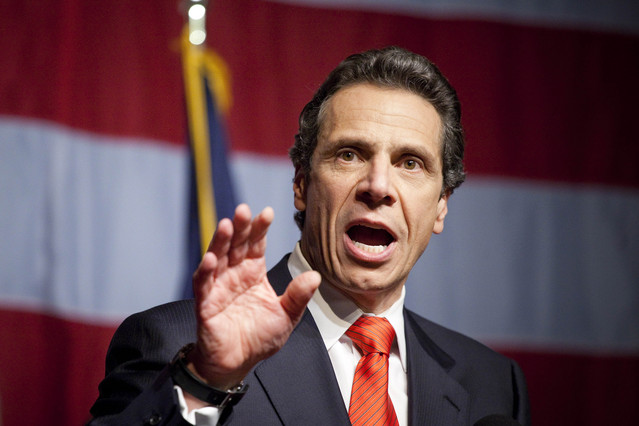
Knowing that Gov. Cuomo’s is considered a possible contender for 2016, his use of taxpayer funds in this regard is appalling. My latest on Canada Free Press this morning:
It is an outrage that Gov. Andrew Cuomo is spending up to $140 million of taxpayer money and funds received for disaster relief, to publicize the advantages of conducting business in New York. New York is indisputably one of the most unfriendly business states, with a Legislature that piles huge administrative burdens onto businesses and a Department of Taxation that is among the most aggressive in the country.
Thanks to the NY Legislature, the state demands a payment of an LLC fee every Jan. 30, causing large administrative burdens disproportionate to a small amount of additional tax revenue. It also requires a high minimum-wage, creating an unnecessary and expensive burden on small businesses.
The state also introduced a brand new “MTA” tax with new forms to fill out as a separate levy, simply because they did not want to take the heat for raising existing rates. When a huge outcry against this ridiculous tax was made, the state’s “fix” was to exempt some lower income businesses while making the complications for the remaining businesses even worse.
New York State recently created a new burden on all employers requiring every employer to make specific annual reports to each of its employees in significant detail, a provision clearly intended more to provide fodder for employer lawsuits than to protect the rights of workers. As long as Sheldon Silver continues as Speaker of the NYS Assembly (and a current partner in an anti-business civil litigation law firm), the legislature will continue to make it inordinately difficult to carry on with business in New York. It should be noted that some well known restaurant organizations have sworn never to open any new facilities in New York State, specifically due to its impossible and litigation-friendly business environment.
The Legislature continues to add the latest nanny state employment regulations each year, making New York a gold mine for lawyers to sue employers over technicalities. Its insistence on giving enormous amounts to its public-service unions guarantees that the tax burden will keep growing in the years ahead. And New York has the “only one in the world” statute (called the Triborough Amendment) — that requires the state to continue paying its public service employees on the items contained within an expired contract — making it impossible to negotiate any austerity.
The New York Department of Taxation is no better, as it ruthlessly goes after extra New York City taxes paid by state residents and New York state taxes paid by non-New York state residents. It demands huge and automatic penalties built into tax law on each assessment, penalties that are used as levers to get the New York taxpayer or business owner to agree to compromises that they often don’t really owe.
One anecdote that encapsulates this mentality is the individual who lived with his family out-of-state. He bought a home for his elderly parents in Staten Island and was successfully taxed as a NY City resident. The state’s determination? He had a key to the front door, and a few items of clothing in the closet!
Clearly, for the average person in New York, it is an onerous state in which to do business. If Mr. Cuomo wants to create a better business image, he must make the state a better and more business-friendly place from the ground up. Instead of trying to deceive people with taxpayer funded propaganda into thinking that New York has a healthy business climate, use that $140 million to reform his deplorable Legislature and Department of Taxation. Any non-NY business that falls for Gov. Cuomo’s propaganda campaign gets what it deserves.
Senator Kirsten Gillibrand’s website proudly proclaims “as the mother of two young children, Senator Gillibrand knows that working families are struggling in this difficult economy.” But Sen. Gillibrand’s positions regarding the economy don’t support such a statement.
When Gillibrand appeared on Meet The Press on April 21, she stated that she refuses to support even the trivial chain “CPI” adjustment of Social Security benefits “because it is not significantly affecting the current deficit”. This reform (backed even by President Obama in his April 7 budget) changes the formula for calculating cost-of-living increases in Social Security, thereby reducing future raises slightly. Gillibrand’s extreme position, on the other hand, flatly spurns any changes that will reduce the looming catastrophe of Social Security.
Gillibrand is well aware that the reason that the current deficit is not being significantly affected is that her children’s future retirement payments are being confiscated, being used to pay for current retirees (whose retirement payments were similarly confiscated). This is the well known Ponzi method of entitlements – taking money from current workers who think — and are being told by Ms. Gillibrand – that they are paying for their own retirement, when in fact the money is being stolen to pay for others whose money was similarly taken under false pretenses.
The current total Social Security liabilities, per the Annual Trustees Report, has ballooned to $20.5 trillion. The liabilities are the promised future payments to workers currently paying into the system. Gillibrand is aware that each year that goes by significantly increases the burden to her own children – and ours, which weakens the economy. For her staunch advocacy of this position, she should be granted the well-earned title of PONZI MOM.
The Senate passed the online sales tax bill, formally known as the “Marketplace Fairness Act”. There is nothing fair about this act. It is a back-door way for states to add additional levies on their citizens under the guise of leveling the playing field . From an accountant’s perspective, here’s how:
Most proponents of the bill suggest that there is somehow a dearth of tax revenue from which states are suffering. This sentiment was echoed in the pages of the WSJ by Arthur Laffer. He wrote that “the exemption of Internet and out-of-state retailers from collecting state sales taxes reduced state revenues by $23.3 billion in 2012 alone, according to an estimate by the National Conference of State Legislatures. The absence of these revenues has not served to put a lid on state-government spending. Instead, it has led to higher marginal rates in the 43 states that levy income taxes”.
This is simply untrue. State legislatures have always set their tax rates with the full understanding that they would not collect that supposed $23.3 billion of internet “slippage”. It’s not like there is a line item in state budgets that lists “uncollected online tax” or “tax cheats” with a number attached. Sales tax is one of many levies whose revenues positively fund government spending. This online tax, if passed by the House next and signed into law, will just be yet another tax (and therefore revenue) for the coffers. Higher marginal rates exists because state-government spending levels are higher, not because of some “absence of tax” that forces states to raise rates.
In our states’ budgets, current taxes rates (income + sales, if applicable) are set at levels appropriate to cover the calculations of state spending. 49 out of 50 states require a balanced budget. These states are fully aware that taxes are “avoided” (internet and out-of-state) and therefore don’t count them in their budget calculations. Thus, by passing this new internet tax, you are merely giving the states a free reign to add a tax without taking the political heat for it, under the guise of “fairness”.
Looked at it another way, it is unconscionable for Congress to pass this legislation without requiring that states lower their marginal rates so that the new tax makes everything revenue neutral. Higher marginal rates as they are already burden taxpayers. This internet tax doesn’t fix anything — because there is nothing in their budgets to be “fixed”. True tax reform (a true “fix”) always means broadening the base and thereby reducing the overall burden of taxes. Instead of that, what we have with this bill is a revenue grab.
Another fallacy for supporters is that including the internet tax in transactions is simply a matter of adding a quick, little tax line where there was none before. But it is highly irrational for legislators to believe that compliance with multiple tax jurisdictions for vendors will be an easy and unburdensome process. The recordkeeping will be excruciating.
This tax nightmare is similar to the 1099 fiasco originally included in Obamacare a couple of years ago, which expanded the reporting requirements to include all payments from businesses aggregating $600 or more in a calendar year to a single payee. Because of the insurmountable amount of reporting and paperwork that would have been associated with it, that provision was swiftly and subsequently repealed.
The effect of distressing our businesses to comply with this online tax collection will be a drag on the economy. Can you imagine vendors needing to figure such things as whether marshmallows are a taxable food/candy in some jurisdictions while it might be a non-taxable food in others? To think that software can seamlessly make this distinction is ludicrous, especially software run by the government. When has the government ever actually streamlined anything? And implementing such a convoluted tax while businesses are already having to deal with sorting out the egregious complexities of Obamacare compliance will certainly hurt businesses even more.
Internet tax collection for 9,600 local tax jurisdictions or even just 50 states is too much. If such a tax is to be passed, it should be either a tax in which every state accepts one set of rules OR a tax payable to the state-of-sale only — which would ultimately be better for tax competition overall.
The economy is suffering enough. Adding yet another tax for citizens, which also requires burdensome compliance for businesses, is not the way to do it. Laffer was correct when he observed that “the principle of levying the lowest possible tax rate on the broadest possible tax base is the way to improve the incentives to work, save and produce—which are necessary to reinvigorate the American economy and cope with the nation’s fiscal problems”. This proposed tax doesn’t do that. In its current form, it is just another revenue stream for our bloated, overspending government.
This is no “Marketplace Fairness Act”. It is an atrocity.
A couple of weeks ago, I spoke at a gathering of higher-income earners. The bulk of the discussion was a comparison of what this bracket of folks just paid in 2012 vs what they will pay in higher taxes in 2013. Some of those taxes had to do with the implementation of Obamacare and the new taxes associated with it.
However, many do not realize that Obamacare taxes, (levies created to help pay for the legislation) do not only affect high income earners. With the report out yesterday that 42% of Americans don’t realize that Obamacare is the law of the land, it is certain that many also don’t know that there are taxes — besides the “penalty” — that will affect many average Americans.
Say what you will about ATR; however, they have been one of the few organizations who have chronicled continuously since Obamacare was written, the various taxes that will be/have been imposed at various stages in the game during this Obamacare roll-out. From the perspective of a CPA like myself, having a list compiled together is very useful. Now that tax season is over, it is never to early to think about next year.
Below is a summary of new Obamacare taxes just for 2013,. These will affect (and probably shock) many Americans when they file their taxes next year.
“Obamacare Surtax on Investment Income: A new, 3.8 percent surtax on investment income earned in households making at least $250,000 ($200,000 single). This tax hike results in the following top tax rates on investment income:
Capital Gains: 23.8%
Dividends: 43.4%
Other* 43.4%
*Other unearned income includes (for surtax purposes) gross income from interest, annuities, royalties, net rents, and passive income in partnerships and Subchapter-S corporations. It does not include municipal bond interest or life insurance proceeds, since those do not add to gross income. It does not include active trade or business income, fair market value sales of ownership in pass-through entities, or distributions from retirement plans. (Bill: Reconciliation Act; Page: 87-93)
Obamacare Medicare Payroll Tax Increase:
Pre-Obamacare:
First $200,000, ($250,000 Married) Employer/Employee: 1.45%/1.45%; 2.9% self-employed
All Remaining Wages Employer/Employee: 1.45%/1.45%; 2.9% self employed
Obamacare:
First $200,000, ($250,000 Married) Employer/Employee: 1.45%/1.45%; 2.9% self-employed
All Remaining Wages Employer/Employee: 1.45%/2.35%; 3.8% self-employed
Obamacare Medical Device Tax:
Medical device manufacturers employ 409,000 people in 12,000 plants across the country. Obamacare imposes a new 2.3 percent excise tax on gross sales – even if the company does not earn a profit in a given year. In addition to killing small business jobs and impacting research and development budgets, this will make everything from pacemakers to artificial hips more expensive. (Bill: PPACA; Page: 1,980-1,986)
Obamacare High Medical Bills Tax:
Before Obamacare, Americans facing high medical expenses were allowed a deduction to the extent that those expenses exceeded 7.5 percent of adjusted gross income (AGI). Obamacare now imposes a threshold of 10 percent of AGI. Therefore, Obamacare not only makes it more difficult to claim this deduction, it widens the net of taxable income. According to the IRS, 10 million families took advantage of this tax deduction in 2009, the latest year of available data. Almost all are middle class. The average taxpayer claiming this deduction earned just over $53,000 annually. ATR estimates that the average income tax increase for the average family claiming this tax benefit will be $200 – $400 per year. To learn more about this tax, click here. (Bill: PPACA; Page: 1,994-1,995)
Obamacare Flexible Spending Account Tax:
The 30 – 35 million Americans who use a pre-tax Flexible Spending Account (FSA) at work to pay for their family’s basic medical needs face a new Obamacare cap of $2,500. This will squeeze $13 billion of tax money from Americans over the next ten years. (Before Obamacare, the accounts were unlimited under federal law, though employers were allowed to set a cap.) Now, a parent looking to sock away extra money to pay for braces will find themselves quickly hitting this new cap, meaning they would have to pony up some or all of the cost with after-tax dollars.
Needless to say, this tax will especially impact middle class families.
There is one group of FSA owners for whom this new cap will be particularly cruel and onerous: parents of special needs children. Nationwide there are several million families with special needs children and many of them use FSAs to pay for special needs education. Tuition rates at one leading school that teaches special needs children in Washington, D.C. (National Child Research Center) can easily exceed $14,000 per year. Under tax rules, FSA dollars can be used to pay for this type of special needs education. This Obamacare tax provision will limit the options available to these families. (Bill: PPACA; Page: 2,388-2,389)”
So, while Obama claims he wants the wealthy to “pay their fair share”, he doesn’t tell you that he also expects millions of average-income Americans to do so — in order to pay for Obamacare. Unfortunately for all of us, as I wrote about earlier, Obamacare levies (many of which are still to come after 2014) still won’t pay for all of Obamacare in through 2023.
In that regard, we are certain to expect more taxes in the coming decade. Taxes are the government’s never-ending solution to raise more revenue (though we are on track to raise record revenue this year). How else are we expected to finance this brilliant, sinking ship?
Listen my children and you shall hear
Of the midnight ride of Paul Revere,
On the eighteenth of April, in Seventy-five;
Hardly a man is now alive
Who remembers that famous day and year.
He said to his friend, “If the British march
By land or sea from the town to-night,
Hang a lantern aloft in the belfry arch
Of the North Church tower as a signal light,–
One if by land, and two if by sea;
And I on the opposite shore will be,
Ready to ride and spread the alarm
Through every Middlesex village and farm,
For the country folk to be up and to arm.”
Then he said “Good-night!” and with muffled oar
Silently rowed to the Charlestown shore,
Just as the moon rose over the bay,
Where swinging wide at her moorings lay
The Somerset, British man-of-war;
A phantom ship, with each mast and spar
Across the moon like a prison bar,
And a huge black hulk, that was magnified
By its own reflection in the tide.
Meanwhile, his friend through alley and street
Wanders and watches, with eager ears,
Till in the silence around him he hears
The muster of men at the barrack door,
The sound of arms, and the tramp of feet,
And the measured tread of the grenadiers,
Marching down to their boats on the shore.
Then he climbed the tower of the Old North Church,
By the wooden stairs, with stealthy tread,
To the belfry chamber overhead,
And startled the pigeons from their perch
On the sombre rafters, that round him made
Masses and moving shapes of shade,–
By the trembling ladder, steep and tall,
To the highest window in the wall,
Where he paused to listen and look down
A moment on the roofs of the town
And the moonlight flowing over all.
Beneath, in the churchyard, lay the dead,
In their night encampment on the hill,
Wrapped in silence so deep and still
That he could hear, like a sentinel’s tread,
The watchful night-wind, as it went
Creeping along from tent to tent,
And seeming to whisper, “All is well!”
A moment only he feels the spell
Of the place and the hour, and the secret dread
Of the lonely belfry and the dead;
For suddenly all his thoughts are bent
On a shadowy something far away,
Where the river widens to meet the bay,–
A line of black that bends and floats
On the rising tide like a bridge of boats.
Meanwhile, impatient to mount and ride,
Booted and spurred, with a heavy stride
On the opposite shore walked Paul Revere.
Now he patted his horse’s side,
Now he gazed at the landscape far and near,
Then, impetuous, stamped the earth,
And turned and tightened his saddle girth;
But mostly he watched with eager search
The belfry tower of the Old North Church,
As it rose above the graves on the hill,
Lonely and spectral and sombre and still.
And lo! as he looks, on the belfry’s height
A glimmer, and then a gleam of light!
He springs to the saddle, the bridle he turns,
But lingers and gazes, till full on his sight
A second lamp in the belfry burns.
A hurry of hoofs in a village street,
A shape in the moonlight, a bulk in the dark,
And beneath, from the pebbles, in passing, a spark
Struck out by a steed flying fearless and fleet;
That was all! And yet, through the gloom and the light,
The fate of a nation was riding that night;
And the spark struck out by that steed, in his flight,
Kindled the land into flame with its heat.
He has left the village and mounted the steep,
And beneath him, tranquil and broad and deep,
Is the Mystic, meeting the ocean tides;
And under the alders that skirt its edge,
Now soft on the sand, now loud on the ledge,
Is heard the tramp of his steed as he rides.
It was twelve by the village clock
When he crossed the bridge into Medford town.
He heard the crowing of the cock,
And the barking of the farmer’s dog,
And felt the damp of the river fog,
That rises after the sun goes down.
It was one by the village clock,
When he galloped into Lexington.
He saw the gilded weathercock
Swim in the moonlight as he passed,
And the meeting-house windows, black and bare,
Gaze at him with a spectral glare,
As if they already stood aghast
At the bloody work they would look upon.
It was two by the village clock,
When he came to the bridge in Concord town.
He heard the bleating of the flock,
And the twitter of birds among the trees,
And felt the breath of the morning breeze
Blowing over the meadow brown.
And one was safe and asleep in his bed
Who at the bridge would be first to fall,
Who that day would be lying dead,
Pierced by a British musket ball.
You know the rest. In the books you have read
How the British Regulars fired and fled,—
How the farmers gave them ball for ball,
From behind each fence and farmyard wall,
Chasing the redcoats down the lane,
Then crossing the fields to emerge again
Under the trees at the turn of the road,
And only pausing to fire and load.
So through the night rode Paul Revere;
And so through the night went his cry of alarm
To every Middlesex village and farm,—
A cry of defiance, and not of fear,
A voice in the darkness, a knock at the door,
And a word that shall echo for evermore!
For, borne on the night-wind of the Past,
Through all our history, to the last,
In the hour of darkness and peril and need,
The people will waken and listen to hear
The hurrying hoof-beats of that steed,
And the midnight message of Paul Revere.
Obama asked for a gun vote during his State of the Union Address. He got it.
Not much more to say about that.
The “Manchin-Toomey” amendment failed in the Senate today on a 54-46 vote. It aimed expand background checks gun shows and to Internet sales.
Republicans who voted “yes” (alphabetically):
Maine Sen. Susan Collins
Illinois Sen. Mark Kirk
Arizona Sen. John McCain
Pennsylvania Sen. Pat Toomey
Democrats who voted “no” (alphabetically):
Montana Sen. Max Baucus
Alaska Sen. Mark Begich
North Dakota Sen. Heidi Heitkamp
Arkansas Sen. Mark Pryor
Nevada Sen. Harry Reid (It is surmised that Reid voted no for procedural reasons in order for Democrats to bring up the provision at a later date)
Update: Obama is blathering on now like a petulant child who lost.