by | ARTICLES, BLOG, ECONOMY, GOVERNMENT, OBAMA, POLITICS, TAXES
Thomas Perez was Obama’s Labor Secretary pick 15 months ago, and he’s emerging as top contender for Attorney General as well. Is it any wonder that he gave a major speech at the National Press Club this week to share his vision of America? Entitled, “Calling for an Economy That Works for Everyone”, Perez discusses the concept of “shared prosperity”.
How many times did he use that phrasing? Try 20 times. These phrases were bold in the speech:
*”An economy that works for everyone is one where prosperity is broadly shared.”
*”The principal unfinished business of this recovery is to ensure that prosperity is broadly shared, and that we build an economy that works for everyone.”
So what is “shared prosperity”? Perez describes, “Step one involves tearing up the talking points and understanding history. Shared prosperity is not a fringe concept cooked up by socialists. Historically, both parties have embraced it with their words and their actions. In fact, it’s a principle as American as apple pie, and it’s the linchpin of a thriving middle class.”
He then cites Teddy Roosevelt, Goldman Sachs CEO, and Janet Yellen as supporters of this concept.
Perez went on to describe three major initiatives which consisted of: raising the minimum wage, more federal spending on infrastructure, and immigration reform. Perez states that a majority of small businesses support a minimum wage increase. He further declared that “shared prosperity” is found in “big bold policy initiatives”, such as “comprehensive immigration reform” (hint: amnesty). Perez claims that immigration reform would raise the GDP 5.4% over the next 20 years and raise wages for workers. This is in contrast to the CBO report that suggests wages would actually be lowered.
Other facets of Perez’s vision of prosperity include: paid leave, job training, and the “importance of the worker voice”, via collective bargaining. Perez particularly praised the collaborative efforts of the SEIU and UAW, calling unions a “critical step” in “shared prosperity”.
Additionally, Perez’s “shared prosperity” called for leadership. Perez’s vision is that of Obama’s: “First, we need leadership from Washington. And if Congress won’t do its part, President Obama has demonstrated that he’ll use his executive, regulatory and convening authorities — his pen and his phone, as he says — to provide that leadership.”
Interestingly, (coincidentally?), “Shared Prosperity” was “Resolution 6” at the Annual AFL-CIO Conference in August 2013. This was held less than a month after Perez became Labor Secretary, and many of its tenets sound remarkably like those championed by Perez, such as:
“• a secure job that pays a living wage in a safe workplace for all who seek one;
• a voice at work—through our unions and through collective bargaining with our employers”
The resolution further describes, “The values of shared prosperity are locked in conflict with the agenda of financial elites and global corporations. But in the end this conflict is self-defeating. A world of radical inequality is not in anyone’s long-term interest. That is why we seek a global economy where worker rights and the environment are protected, an economy where global finance is regulated and put to work to increase shared prosperity.”
You can read the entire agenda here. And apparently, the Washington State Labor Council was so impressed with this idea, they announced their own “shared prosperity” agenda in January 2014. Will other state councils follow suit?
“Shared prosperity”, however, is really nothing new. Hillary Clinton discussed this very concept in a campaign speech from 2007, entitled “ECONOMIC POLICY: Modern Progressive Vision: Shared Prosperity”. And at a campaign fundraiser in 2012, Obama also called for “shared prosperity” in his own speech when he asked folks in Chicago: ““Do we go forward towards a new vision of an America in which prosperity is shared? Or do we go backward to the same policies that got us in this mess in the first place?”.
As our current Secretary of Labor, Perez wished to implement this vision of “shared prosperity” into labor practices for America. If Perez is on the short list for Attorney General, how does he feel about the law? One more excerpt from his speech:
“Leadership also means enforcing the law fairly and independently. At the Labor Department, we’re being more strategic and aggressive than ever about cracking down on wage theft, misclassification and other violations. During the Obama Administration, we’ve recovered more than $1 billion in back wages. We’ve taken enforcement to a whole new level — not only because it gives workers the pay they’ve earned, but also because it levels the playing field and helps the vast majority of employers playing by the rules. Laws are only as effective as the political will of those enforcing them.”
Thomas Perez’s previous position before becoming Labor Secretary was serving as the Assistant Attorney General for the Civil Rights Division of the United States Department of Justice. No wonder he is a front runner to succeed Eric Holder.
by | ARTICLES, BLOG, BUSINESS, ECONOMY, HYPOCRISY, OBAMA, POLITICS, TAXES
Michelle Nunn has been getting a lot of traction on the “shipping jobs overseas” rhetoric in an effort to paint her opponent, David Purdue, as unsympathetic to American workers. It’s a tactic toward anyone who is in business to demagogue them for shipping jobs overseas, just like they did to Romney in 2012.
Michelle’s cheap shots have lead her to create an ad campaign specifically focused on this narrative. Hours of countless searching has turned up a deposition from 2005, during which David Perdue “answered a question about his ‘experience’ with outsourcing by saying: ‘Yeah, I spent most of my career doing that.’”
Unfortunately, she made a bad decision about whom she chose to highlight — it turns out the ad features a businessman, Roy Richards Jr, whose company has also outsourced jobs. Perhaps she should have done her homework on him instead.
Politifact of Georgia couldn’t even make the stretch that Purdue’s career outsourcing meant that he “was proud to have sent jobs overseas”. Politifact noted, “it is accurate to claim Perdue’s sworn statement is that he spent most of his business career outsourcing. But that doesn’t translate into callous indifference to American workers – or even a tenure that did nothing more than ship jobs abroad. We continue to rate the claim Half True.”
The Washington Examiner goes more in-depth to the nature of his business dealings:
“Perdue was not referring to outsourcing as most understand it – that is, the process of firing American workers in favor of cheap labor overseas — but rather a business plan for his former company, Pillowtex, to save some American jobs, as Politifact noted.
“There is nothing to suggest he was narrowly moving jobs overseas just to increase profits or give himself a bonus,” said Rob Bliss, a finance professor at Wake Forest University in an interview with Politifact. “Moving jobs overseas would have been an effort to make the company more competitive. It’s a perfectly legitimate thing to do.”
Politifact also noted other companies where Perdue worked that did outsource jobs, but said those companies were “in industries where jobs were being lost to both cheaper foreign production — outsourcing — and also to technology and global business trends far outside his scope of control.”
As for the attack ad trying to substantiate that Perdue despises American workers, National Review Online called it “seriously hypocritical” since the featured businessman apparently also engaged in outsourcing at his own company. The Atlantic Journal-Constitution gives a rundown here. And NRO noted that “Cato’s Dan Ikenson has explained in Forbes, relocating jobs overseas can have as much to do with costs for customers, proximity to supply chains, or interest in new consumer markets as it does with labor costs and profitability.” Simply put, it’s a stretch to boil down “outsourcing” as simply disdain for the American worker for the sake of profit. But that is what Michelle Nunn wants you to believe.
Businesses continuously make decisions about where to get jobs and how to keep a company afloat. If the policies here in the United States are making it difficult to succeed and compete, or the market and demand has changed, that’s not the fault of the business owner. They must be willing to adapt or risk going out of business. Someone as ignorant as Michelle Nunn about basic economics should not be elected to Senate.
by | ARTICLES, BLOG, ECONOMY, FREEDOM, GOVERNMENT, OBAMA, POLITICS, TAXES

During a speech at UNLV this week, Hillary Clinton discussed higher education and her opinion that “more needs to be done to assure young people can achieve their dreams and free students from debt.”
While making higher education more affordable is certainly a worthwhile endeavor, the means by which the Democrats have made changes — and continue to push for more change — to the student loan system will cause even higher tuition costs, unsustainable taxpayer debt, and create another rail of entitlement.
The first wave of detrimental change came in 2010 with the Pay-As-You-Earn Program implemented in 2010. Essentially, PAYE has repayment options based on 10% of discretionary income. However, if the payment doesn’t cover the accruing interest, the government pays your unpaid accruing interested for up to three years from when you begin paying back your loan under the PAYE program.” That means the taxpayer.
Obama expanded that 10% income cap this past June with an Executive Order. Its purpose is to extend “such relief to an estimated five million people with older loans who are currently ineligible”, according to the New York Times.
Though this Executive Order — and its 2010 law counterpart — may sound well and good, financially it is a disaster. The 10% income repayment does not help any young person get off on a solid financial footing. Likewise, because some sectors allow for loan forgiveness after a period of time, that amount gets written off by the federal government, thereby substantially adding to the federal debt.
And what of the federal debt? Earlier this summer, CNS News compared the current cumulative outstanding balance on federal student loans to the balance owed in January 2009, and found it had skyrocketed 517.4 percent:
“The balance owed as of the end of May was $739,641,000,000.00. That is an increase of $619,838,000,000.00 from the balance that was owed as of the end of January 2009, when it was $119,803,000,000.00, according to the Monthly Treasury Statement”.
They then compared it to George Bush’s tenure:
“During President George W. Bush’s time in office, the amount of outstanding loans increased from $67,979,000,000.00 in January of 2001 to $119,803,000,000 in January of 2009, an increase of 76.2%. This means that under President Obama, the amount of federal direct student loans increased 579% more than under President Bush.”
The most influential factor in this rapid rise of student loan debt is the PAYE program repayment terms. Besides the 10% option, students also have two other possibilities of loan help, known as “forgiveness:”
1) The balance of your loan can be forgiven after 20 years if you meet certain criteria, OR 2) Your loan can be forgiven after 10 years if you go to work for a public service organization (known as Public Service Loan Forgiveness, or PSLF).
The Wall Street Journal recently discussed the impact of “loan forgiveness” when it highlighted a report from the New America Foundation, which analyzed the PLSF impact. The WSJ noted that the report found “it will not be a small population of borrowers standing in line for this gift from taxpayers. The federal government estimates that a quarter of all jobs may qualify”.
Furthermore, the study concluded that:
“it could become common for the government to pay for a student’s entire graduate education via loan forgiveness” if those kids take jobs at a nonprofit or in government. The new payment terms for such borrowers “are unlikely to cause many graduate and professional students to fully repay their loans—even if they earn a competitive salary in their chosen careers or a salary that places them among upper-income Americans.”
and also,
“This will likely provide an incentive for graduate and professional students to borrow more rather than less, particularly for some professions. It should also make graduate students less sensitive to the price of a graduate or professional degree, allowing institutions to charge higher tuitions, especially for certain programs like healthcare, social work, education, and government, where borrowers would go on to qualify for PSLF.”
The government meddling in higher education and loan programs has perpetuated more crises, which in turn has created more government “fixes”, and hence, a new-tier of entitlements — this time, for education. And that’s not all. Senator Elizabeth Warren proposed a bill earlier this year allowing student loan holders to refinance their loans at a lower rate. How? You guessed it: a bailout to be paid for by yet another tax on the wealthy. President Obama, of course, has endorsed this legislation, but it has yet to pass Congress.
The long-term effect of such an education policy is that a new generation of youth will be raised to pursue careers in the public and non-profit sectors by the dangling carrot of free education money — instead of slugging it out in the private sector.
Do we need more regulators and bureaucrats? Where is the encouragement for innovation, for entrepreneurship, for capitalism? Where is the risk-taking? Why risk-take when you can get your education paid for by taxpayer-funded loan forgiveness and a comfortable government or non-profit job?
Small businesses have been the backbone of America. Our country was built upon those who were willing to invest their time and money to become great. This approach to education is undeniably detrimental to our future by saddling taxpayers with unseemly debt while discouraging our young people from seeking private enterprise. That is not the American Dream.
by | ARTICLES, CONSTITUTION, ELECTIONS, FREEDOM, GOVERNMENT, OBAMA, POLITICS
Last week on October 7, it was reported that Liberia’s President, Ellen Johnson Sirleaf, asked for more emergency powers to help contain and prevent the current Ebola crisis. Liberia is already under a state of emergency and curfew, which began in August. But according to VOA News:
“In a letter to the Plenary of the House of Representatives and the Senate, Sirleaf asked for powers to amend seven different articles under the constitution, including freedom of movement, speech, religion, confiscation of private property, and elections.”
Besides asking for extra powers, and citing the current “state of emergency”, President Sirleaf then proceeded on October 8th to suspend nationwide elections for Senate due to be held later this month. Yahoo News reported that,
“Almost three million voters had been due to take part in Senate polls on Tuesday but organisers said there was no way a “mass movement, deployment and gathering of people” could go ahead without endangering lives.”. A presidential proclamation claimed the state of emergency allowed her to “to suspend… any and all rights ordinarily exercised, enjoyed and guaranteed to citizens.”
You can read her power request letter here.
One chilling request is that “the president has asked for a temporary extension of the state of emergency removing a constitutional right to make public speeches which could “undermine” the response to the epidemic.”
Opposition to the election suspension was swift. Tokpa Mulbah, a member of the House of Representatives from the People Unification Party, stated that “The Chief Executive, Madam Sirleaf, does not have that constitutional authority to make such a pronouncement. So based on that, we will be drafting a resolution Thursday to be sent to the Liberian Senate for a vote and placed in front Madam Sirleaf to sign so that the Elections Commission can go ahead to conduct elections from now till December 30 so that come second Tuesday in January the new 15 senators will be able to take their seats.”
In fact, the House went on to vote to reject Sileaf’s request “for more powers to restrict freedom of Movements, speech, religion, assembly and of the press, as well as property rights, through a motion filed by Representative Brown. Both Houses, in a Joint Resolution passed on Friday, October 10, 2014, unanimously voted to overturn a President Sirleaf’s decision to indefinitely cancel the October 14 Mid Term Senatorial elections.”
Is is unclear if the Senate concurred with the House. According to AllAfrica, the Senate is torn and is still debating.
Freedom of the Press has also been under attack since the curfew. Apparently, “journalists were not included on a list of exempted professions able to move freely around the country at night. (They were added six days later.) In early October, citing privacy concerns, the government announced that reporters could be arrested for speaking with Ebola patients or photographing treatment centers without written permission from the health ministry.” Further information regarding the freedom of the press during the Ebola crisis can be found here.
Liberia spent two decades of civil war, and the election of President Sirleaf was seen as a more stable, constitutional rule. Liberians should reject this attempted power grab, even in the midst of such a tragic time in their country, in order to safeguard their liberties for the long-haul.
by | ARTICLES, ECONOMY, FREEDOM, GOVERNMENT, OBAMA, OBAMACARE, POLITICS, TAX TIPS

This Washington Times piece did a nice overview of FY2014:
The Treasury Department unveiled its Fiscal Year 2014 numbers, which showed that the government’s revenue, for the first time ever, hit the $3 trillion mark. However, the government still overspent its revenues, leaving a $483 billion deficit.
Supporters of President Obama are touting the “success” of a $483 billion deficit by pointing out its the lowest deficit since 2008. A “mere” $483 billion deficit is not something to be celebrated. It means that, despite record revenues, the government still engages in out-of-control spending.
By comparison:
“The government first hit the $1 trillion revenue mark in 1990, then hit the $2 trillion mark in 2000. But President George W. Bush’s tax cuts and the bursting of the 1990s Internet bubble cut into revenue, dropping it to $1.8 trillion in 2003, before it began the shaky climb to $3 trillion.
Just five years ago, in 2009, the trough of the recession, revenue was only $2.1 trillion. That means it’s leapt $900 billion in just five years.”
And here’s where the dichotomy lies. The Left sees high government revenue as something to be celebrated, while the Right understands that high government revenue means less money for the private sector. “Every one of those $3 trillion is sucked out of the private-sector economy and makes the private sector smaller,” said Chris Edwards, director of tax-policy studies at the Cato Institute. “The $3 trillion isn’t free. It comes out of our pockets and from the private economy.”
Contrast his analysis with Jack Lew’s, Treasury Secretary. “The president’s policies and a strengthening U.S. economy have resulted in a reduction of the U.S. budget deficit of approximately two-thirds — the fastest sustained deficit reduction since World War II,” Mr. Lew said.
What are those “president’s policies”? Successful tax hikes. The highest 2% earners saw their tax margins increase; all earners saw their payroll taxes go up. And don’t forget the Obamacare taxes. The full list of all of Obama’s tax increases can be found here.
Perhaps the most profound statement can be summed up here: “Spending, meanwhile, has remained relatively flat at about $3.5 trillion.”
When spending is “flat” at $3.5 trillion, we definitely have a problem. Each year since 2009, the Obama Administration has spent over $3 trillion, the only president to ever do so: From 2009 – 2013 respectively, here are the numbers of spending in per year: 2009: $3,517,677; 2010: 3,457,079; 2011: $3,603,059; 2012: $3,537,127; 2013: $3,454,605. For a full chart of historical federal spending per year, go here. Federal spending has remained consistent at around $3.5 trillion/year — consistently high. Over-budget. And adding deeply to the deficit each year.
It will be interesting to revisit this next year at the end of FY2015, when Obamacare, the crowning Obama policy achievement, really gets going. Remember how Obamacare was going to reduce deficits? About that. The Weekly Standard recently did a thorough analysis of Obamacare projections and found that:
“So, compared to the deficit surplus of $180 billion for 2015-24 that a straight extrapolation from the CBO’s 2012 scoring would yield, current projections now indicate that Obamacare’s decreased spending (in relation to prior expectations) will reduce deficits by another $83 billion (bringing the estimated surplus to $263 billion), but those projected surpluses will be more than offset by the projected $132 billion decrease in Medicare revenue and $262 billion decrease in tax revenue due to lower job growth.
In all, therefore, CBO projections indicate that Obamacare will increase deficit spending by $131 billion from 2015-24. That’s a $311 billion swing from the extrapolated 2012 numbers, a $240 billion swing from the actual 2012 numbers, and a $255 billion swing from what we were told when Obamacare was passed.
So, this fiscal year was more of the same. Government overspending, gleefully celebrated by record tax collections of your hard earned dollars. The rapacious government needs to be fed.
by | BUSINESS, ECONOMY, FREEDOM, GOVERNMENT, HYPOCRISY, TAXES

Last week, I wrote about the population shift from the northeastern states to other parts of the country due to the high taxation. It seems that the Yankees aren’t the only ones concerned enough with crushing taxes that they are willing to relocated — the French are too.
From the Independent:
“France’s unemployment rate is hovering around 10 per cent. As for high-earners, almost 600 people subject to a wealth tax on assets of more than €800,000 (£630,000) left France in 2012, 20 per cent more than the previous year. Manuel Valls, the Prime Minister, announced in London this week that the top income tax rate of 75 per cent would be abolished next January after a number of business tycoons and celebrities moved out.”
Hélène Charveriat, the delegate-general of the Union of French Citizens Abroad, concurs. Charvariat noted that the “young people feel stuck, and they want interesting jobs. Businessmen say the labour code is complex and they’re taxed even before they start working. Pensioners can also pay less tax abroad.”
Though the repeal of the 75% is a start, the loss of French citizens to other parts of the world is going to hamper economic recovery in France. I wrote about this probability in 2012 when Hollande first proposed his “rich tax” scheme. The Laffer Curve effect has been proven here in France as it did in England last year: namely, that increasing tax rates beyond a certain point will be counterproductive for raising further tax revenue.
As we can see, high taxes drives away citizens who wish not to hand over to the government the money they have saved and earned — just to see it misspent and frittered away.
by | ARTICLES, BLOG, BUSINESS, ECONOMY, GOVERNMENT, OBAMA, POLITICS, TAXES
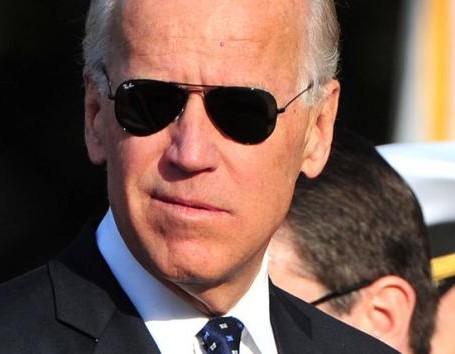
While stumping for Democrat candidates in Oregon, the Vice President shared his thoughts on the current economy with voters. And he got it very wrong.
“Economic growth has replaced the income that was lost during the recession, but the gains went primarily to taxpayers on the top. I think we should make them start to pay their fair share. Take the burden off the middle class”
Economic growth has not happened. Since Obama began his presidency:
The national debt has skyrocketed from $10.6 trillion to $17.8 trillion
Homeownership has decreased from 67.5% to less than 65%
Labor participation has fallen from about 66% to 63%.
Food stamp use has increased from 32 million to 46 million participants
Lost income has not been replaced: Since Obama began his presidency:
Median incomes have decreased from about $54,000 to $51,500.
The number of Americans who consider themselves middle class has dropped nearly 20%
Gains did not primarily go to taxpayers on top:
“The top 20 percent of earners accounted for 51 percent of all income in 2013, unchanged from 2012 and up slightly from 49.4 percent in 1999″.
Of course, Biden used his (wrong) economic talking points to pull out the old class-warfare playbook and insist that the rich “pay their fair share”.
Finally, if Biden is concerned about taking the burden off the middle class, he needs to start with the government. As I said earlier this week, the middle class has been the most devastated by Obama’s policies. Job growth and small business sustainability have been decimated by government regulation, taxation, fines, and lawsuits meddling in normal business practices. The middle class can’t get good jobs anymore, businesses have failed, growth is tepid, and everyday Americans are rightfully discouraged.
by | ARTICLES, BUSINESS, ECONOMY, GOVERNMENT, OBAMA, POLITICS, TAXES
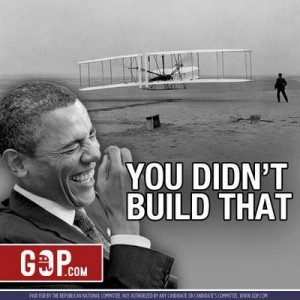
Suddenly, Obama is everywhere talking about economic policies again. He is the mastermind behind the growth in corporate profits. He is the reason for the current stock market highs. He has single-handedly reduced unemployment to its lowest rate since 2008. He is Obama!
And yet, the middle class is repeatedly telling Obama that they feel left behind.
Why such disparity? The Administration can try to attribute these recent “successes” to Obama, but it only shows that they have a laughable cluelessness about what is really happening as a result of his economic policies.
Major corporations are doing well because they have enough size and stability to weather the storm created by Obama’s terrible business policies. This has included minimizing employment and trying to be as lean and efficient as possible. Mom-and-pops, on the other hand, have not the luxury to be as resilient.
The stock market is high only because major corporations have continued to persevere by changing the way they do business. Because of the government policies — including over-regulation and excessive taxation — companies have been forced to operate on the skinny just to survive. By doing so, profits are able to be maintained and the stock market reactive to that.
As a result of efficiency, therefore, unemployment is at its lowest percentage because there are no jobs to be attained anymore and people are just simply leaving the workforce altogether. Obama refuses to acknowledge the fact that labor participation is at its lowest rate since 1962. That is the major contributing factor to his “low” unemployment number — not because of job creation as he claims. Americans have stopped looking for work.
Thus, the middle class has the correct assessment because they have been the most devastated by Obama’s policies. Job growth and small business sustainability have been decimated by government regulation, taxation, fines, and lawsuits meddling in normal business practices. The middle class can’t get good jobs anymore, businesses have failed, growth is tepid, and everyday Americans are rightfully discouraged.
Related: “AP’s ‘Fact Check’ of Obama’s ‘Stronger Economy’ Claims Limited to ‘A Few’ Items: Two”
Lou Dobbs Refutes Obama’s Claim that the Economy Has Improved by Every Economic Measure
Are You Better Off Today? Here are the True Facts & Figures From the Obama Economy