by | ARTICLES, BLOG, GOVERNMENT, OBAMA, OBAMACARE, TAXES

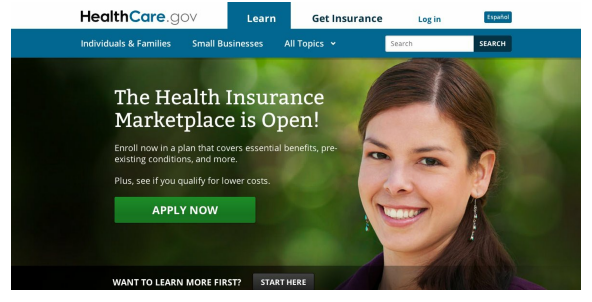
If you are an Obamacare enrollee, you will not be able to file your taxes next year until you receive a new Obamacare form, the 1095A. That means if the government is not on time getting the forms out, taxpayers who need the form could face a delay receiving anticipated refunds.
The proposed deadline to send out the forms is January 31, 2015, which also coincides with the date that employers must issue W-2 to their employees.
Form 1095A is necessary: filers need the forms to calculate whether they received the correct subsidy from the government, or if they owe money to cover a difference”. The IRS has a working draft on the form, but doesn’t yet include the instructions on how to calculate the proper subsidy amount — and that’s the key.
Because of the extensive problems during the Obamacare rollout and initial signup period, some folks may find that the did not receive the proper subsidy. Additionally, changes to income during the year might also affect the outcome. The Form 1095A is designed to match up the income for 2014 with the subsidy amount received. Some might find they will didn’t get enough of a subsidy and will receive money back, while others could have the opposite problem: their subsidy was too high, and they now owe money back.
So Obamacare users — be on the lookout for the 1095A early next year. Even if you have all your documentation to file your taxes, you still may not file until you receive that form. Hopefully the government will not be as late on issuing it as it was with other Obamacare related items.
by | BLOG, BUSINESS, ECONOMY, ELECTIONS, FREEDOM, GOVERNMENT, OBAMA, POLITICS
Friday before Election Day, the Obama Administration via the Department of Education released a “gainful employment” rule applicable to higher education, which singles out a particular type of learning institution: the for-profit school. The new regulation will prohibit students from being able to receive federal student aid “unless the program can show that their graduates’ annual loan payments do not exceed 20% of discretionary income, or 8% of total earnings.” The Department of Education essentially surmises that for-profit schools do not produce quality programs.
Basically this new rule will throw many for-profit colleges out of business. It’s not the first time a regulation of this kind has been issued, either. A federal court struck down the first attempt put forth by the Administration back in 2012. And yet, this newer version is more stringent — with 7 times as many programs likely to not pass standards/criteria for “gainful employment” now. The estimate is that around 1,400 programs educating 840,000 persons will fail the new magical threshold.
The Administration has stated that the goal of the new rule is to “protect students”, and that the rule is necessary “to ensure that colleges accepting federal funds protect students, cut costs and improve outcomes.” However, the rule is not applicable to public and nonprofit institutions. When pressed for the double standard during a congressional hearing on the topic last spring, Education Secretary Arne Dune said that “development of the college rating systems would address the rest of higher education”. That is a cop-out.
So here we have an Administration interfering with the ability of adults to pursue the educational path that best fits their needs by limiting their choices through the deliberate withholding of financial aid assistance from certain schools or programs that the government deems unfit. The government has chosen to redefine the term “gainful employment” in such a way that many career pathways will now be closed at a myriad of institutions that have previously educated many — especially a large number of poor and/or minority persons. These students quite often lack parental financial assistance anyway, and now removing the option for financial aid adds another barrier to upward mobility.
This ridiculous regulation was opposed in a signed letter by 18 members each of both the Republican and Democrat parties last spring, many of whom are minorities, citing their concerns for its adverse affect on low income students and those from non traditional backgrounds. However, their non-partisan approach fell on deaf ears.
Our country has many options for education — some students thrive a four year public institution; others, a community college or small private school and still others, a for-profit institution. Though Obama has consistently championed college education, this rules changes will make it harder, not easier, for a segment of the population to become a college graduate.
Another troubling aspect is how the rule measures debt. The WSJ points out that, “if the department were merely trying to protect students, then Mr. Obama’s “Pay As You Earn” plan that caps loan payments at 10% of discretionary income would make the rule moot. This is why the rule doesn’t measure graduates’ actual loan payments, but rather the median amount of debt they incur amortized over 15 years for bachelor’s degrees. Many students take up to 25 years to repay their loans.”
And more: “This economic reality is why the Administration is steering students toward loan forgiveness plans like Pay As You Earn. Grads who find non-gainful employment in government or at a nonprofit can get their loans forgiven after 10 years of modest payments. So the White House is encouraging graduates to pursue low-paying jobs in “public service” even as it punishes for-profit colleges whose graduates do precisely that.”
The Administration is once again picking winners and losers, this time in the realm of education. The new rule essentially encourages students to pursue their education — but only at places whose programs and operations are subsidized by taxpayer dollars.
by | FREEDOM, GOVERNMENT, OBAMA, OBAMACARE, POLITICS, TAX TIPS, TAXES
If you are one of the millions of Americans who declined health insurance and decided to pay the fee tax fine penalty, be aware that it will be a part of your 2014 tax calculations. The penalty for 2014 is relatively cheap, a means to transition Obamacare into your life, but next year and subsequent years, the penalty goes up swiftly — pressuring you to get a health insurance plan or else pay a somewhat hefty price.
Here’s how it works:
“Beginning in 2014, absent a qualified exemption, you will be required to obtain health insurance. If you fail to comply, you will be subject to a penalty of 1.0% of your annual income or $95.00, whichever is greater. In 2015, the penalty increases to the greater of 2.0% of annual income or $325 per person. The following year it becomes the greater of 2.5% of income or $695 per person. After 2016, it will be indexed to the cost of living. It should also be noted that the maximum penalty is capped at three times the per person penalty. For example, if you earn $28,500 in 2014, 1.0% of your income would equal $285. Therefore, if you earn more than this, your maximum penalty would remain the same. All penalties will be due and payable with your annual federal income tax return. Hence, the penalty for 2014 would be due by April 15, 2015 and the IRS will be the collection agency used.”
The method of assessing and collection the fee is through the Internal Revenue Service (IRS). The fee will be collected by deducting its cost from a person’s tax refund. But for those who don’t get a refund, the IRS isn’t allowed to demand payment either, so it is unclear how those fees will be attained. This ambiguity also leads to further questions about how Obamacare is being actually being paid for (as the penalty is one of the revenues to help offset the costs).
“For Americans unsure how the mandate applies to them, there’s plenty of information available from the government itself and from many third-party web sites. The law was designed to make it cheaper for most people to buy insurance than pay the penalty fee, which rises from $95 per person or 1% of your income (whichever is greater) in 2014, to $325 per person or 2% of your income in 2015. (In 2015, the maximum penalty is the national average premium for a bronze plan.)”
Don’t forget too: if you are an Obamacare user, you will have to file an extra form with your taxes, the 1095A. The IRS has a working draft on the form, but doesn’t yet include the instructions on how to calculate the proper subsidy amount. This could potentially cause issues for those who wish to file their taxes right away, because they will have to wait until they receive their form in the mail from the government. To learn more, read here.
by | BUSINESS, ECONOMY, FREEDOM, GOVERNMENT, OBAMA, POLITICS, TAXES
Well, now we know something that has been long suspected for the past four years: the IRS and the White House are sharing taxpayer information.
That has certainly been the suspicion since at least 2010, when a senior White House official, Austan Goolsbee, made a comment about the Koch Brother’s business practices in August 2010. The Weekly Standard was one of the first to cover this indiscretion as part of an article about the growing practice of attacking the Koch Brothers by liberals. From TWS back then:
“While the attention is unwanted for the Kochs, if somewhat expected, a lawyer for Koch Industries now tells THE WEEKLY STANDARD that the administration may have crossed a line by revealing tax information about Koch Industries. According to Mark Holden, senior vice president and general counsel of Koch Industries, a senior Obama administration official told reporters at an August 27 on-the-record background briefing on corporate taxes:
“So in this country we have partnerships, we have S corps, we have LLCs, we have a series of entities that do not pay corporate income tax. Some of which are really giant firms, you know Koch Industries is a multibillion dollar businesses. So that creates a narrower base because we’ve literally got something like 50 percent of the business income in the U.S. is going to businesses that don’t pay any corporate income tax. They point out [in the report] you could review the boundary between corporate and non-corporate taxation as a way to broaden the base.”
Holden tells THE WEEKLY STANDARD that this quotation from a senior administration official “came to our attention from different avenues. We are very concerned about why this would be said about us, particularly in this setting. We are concerned where this information would have been obtained from. We also are concerned in light of recent events that we have been singled out by the government and others as a campaign against us because of our political views.“
Additionally, Austan Goolsbee further this very line of thought on an interview shortly thereafter on September 12, 2010 with Chris Wallace.
During that fall of 2010 right before midterms, the Obama Administration started targeting small businesses and the way they pay taxes, as part a push for higher individual rate margins/repeal of the Bush Tax Cuts. The Administration began specifically trying to discredit Koch Industries and a plethora of small businesses by implying that not paying corporate taxes is somehow wrong or underhanded — while omitting that fact many businesses structure themselves as non-corporate entities to avoid the scourge known as double taxation. The White House used the Koch Brothers’ tax structure in an attacking anecdote, and openly discussed tax information that was not publicly available, in order to bolster their own talking points.
This has come back to light now four years later. Last week, TIGTA acknowledged the existence of about 2500 documents that fit the FOIA request, from a group called “Cause of Action”, asking for communication between the IRS and the White House.
Then on Tuesday, TIGTA retreated from its openness by withholding the bulk of the documents. A letter from TIGTA counsel to the group suing for the information, noted that there were 2,509 pages of documents “potentially responsive to your request”, and of those, 2,043 were in fact responsive. However, TIGTA cited tax code and privacy as the reason not to disclose those documents, saying “All of the 2,043 pages of documents we have determined to be responsive were collected by the Secretary of the Treasury with respect to the determination of possible liability under Title 26 of the United States Code. These pages consist of return information protected by 26 U.S.C. § 6103 and may not be disclosed absent an express statutory exception.”
Clearly, even without knowing the substance of the information, we do now know that the IRS and White House have shared some taxpayer information (roughly 2500 documents worth), which is a stunning breach of impropriety. The Koch Brothers were definitely in the crossfire back in 2010, and have been a concerted target of liberals ever since. Everyone questioned how the White House could know about their confidential taxpayer information. Now we know how. We just don’t know how deeply. Or who else.
The act of the IRS sharing the information is in itself a violation of federal law 26 U.S.C. § 6103, which is the very same law they are using to shield themselves from releasing the information now, citing “privacy”. The fact that the IRS and White House teamed up to share taxpayer information, and in at least one instance, used it to target American business owners while pushing their own economic agenda is thoroughly atrocious.
Update: Washington Free Beacon corroborates the Austan Goolsbee link, as the original FOIA request from “Change of Action” was specifically related to how the White House appeared to possess private taxpayer information of the Koch Brothers.
by | ARTICLES, FREEDOM, GOVERNMENT, OBAMA, POLITICS, TAXES
Last week, TIGTA revealed the existence of around 2500 documents “relating to investigations of the improper disclosure of confidential taxpayer information by the IRS to the White House.” December 1st was the deadline for the Department of Justice’s tax department to turn over those documents, as ordered by a judge. You can read more of that background story here.
The group involved in the FOIA request for documents is called “Cause of Action”, and they consider themselves a government watchdog of sorts. In an email last week from TIGTA on the matter, the department asked for more time (from Dec 1 to Dec 15) to go through the remaining 500 of the 2500 documents to determine if they were pertinent. This acknowledgment of the documents seemed promising that TIGTA would be forthcoming on the matter, as they have been pretty above board during the IRS Scandal in general.
However, yesterday TIGTA appeared to retreat from its openness by withholding the bulk of the documents. A letter from TIGTA counsel to the group noted that there were 2,509 pages of documents “potentially responsive to your request”, and of those, 2,043 were in fact responsive. However, TIGTA cited tax code and privacy as the reason not to disclose those documents, saying “All of the 2,043 pages of documents we have determined to be responsive were collected by the Secretary of the Treasury with respect to the determination of possible liability under Title 26 of the United States Code. These pages consist of return information protected by 26 U.S.C. § 6103 and may not be disclosed absent an express statutory exception.”
The group will receive 466 documents on December 15 that apparently aren’t protected information. However, the sheer number of documents being withheld, which are acknowledged to a) be correspondence between the White House and IRS, and b) to contain protected “return information” reveal a stunning breach of propriety. The letter also contained a fairly lame notation that “Treasury Secretary Jack Lew is now looking into ‘potential liability’ that his tax aides broke laws in sharing taxpayer information with the White House.”
Forbes raised some interesting points on the matter: “A key question is whether any officials at the White House have ever asked anyone over at the IRS to transmit private taxpayer information to the White House in violation of law. Another question, regardless of whether the White House asked for any taxpayer information, is whether the IRS ever transmitted any.”
So is there a pattern of targeting from the White House? And will the hard drive containing the withheld documents suddenly crash?
Forbes sullenly concluded that “the data may seem unimportant, and hopefully it will turn out to be. Still, the privacy protections for taxpayer data held by the IRS are among the most sensitive parts of the tax law. That makes any alleged transgressions of these rules serious. It makes this topic arguably the worst part of the IRS scandal so far.”
Indeed. 2000+ documents linking the IRS and the White House, yet unavailable for review. Is there still “no smidgen of corruption”?
by | ARTICLES, FREEDOM, GOVERNMENT, OBAMA, POLITICS, TAXES
As part of the IRS Scandal over the last 18 months, people have questions if, and how deeply, the ties exist between the IRS and White House. A group named “Cause of Action” sued to get access to any documents that show such communication.
Last week, the Justice Department apparently sent an email over the matter, asking for more time to finish the request made by Cause of Action, due to a potentially large number of documents that fit the request. Here is the available text of the email from the Justice Department’s tax office:
“My client wants to know if you would consent to a motion pushing back (in part) TIGTA’s response date by two weeks to December 15, 2014. The agency has located 2,500 potentially responsive documents and anticipates being able to finish processing 2,000 of these pages by the December 1 date. It needs the additional two weeks to deal with the last 500 pages to determine if they are responsive and make any necessary withholdings. We would therefore like to ask the court to permit the agency to issue a response (including production) on December 1 as to any documents it has completed processing by that date, and do the same as to the remaining documents by December 15. I note that the court’s remand was for a “determin[ation],” which the D.C. Circuit has recently explained can precede actual production by “days or a few weeks,” but we would prefer to simply agree on a date for turning over any of the remaining 500 documents that may be responsive.”
Here we have the admission that potentially 2500 documents exist which show taxpayer information being shared with the White House. This is a pretty large number; what information that is and in what context remains to be seen. So far, TIGTA has been a help, not a hindrance, in the IRS scandal. Will that continue with this latest revelation?
by | ARTICLES, BLOG, CONSTITUTION, FREEDOM, GOVERNMENT, OBAMA, TAXES
The White House released its latest regulatory agenda for the fall. This current amount contains 3,415 items for consideration. Did you miss the list? Most people did; the White House released the massive agenda on the eve of Thanksgiving. The Daily Caller notes that this latest document dump marked “the fifth time the Obama administration has released its regulatory road map on the eve of a major holiday”. It follows the footsteps of last spring’s agenda, when it was released right before Memorial Day.
The 3,415 regulations “includes 189 rules that cost more than $100 million.” These include several controversial EPA rules and regs, such as the redefinition of the “Waters of the United States” under the Clean Water Act. Likewise, several educational proposals, which seem to expand federal reach into education, have raised eyebrows.
Center for Progressive Reform Executive Director Matt Shudtz remarked that “it’s a shame that the Obama administration goes about intentionally releasing such important agendas in stealth at times when Americans are the most distracted, especially when its wide range of rules and regulations touch virtually every American both here and abroad.”
To view the entire list, called the “Unified Agenda for Fall 2014” go here.
by | ARTICLES, ECONOMY, FREEDOM, GOVERNMENT, POLITICS, TAX TIPS
Even though the government is bringing in record revenue, its spending is still outpacing its intake. CNS News did an analysis of Treasury Statements, and revealed that the Department of Treasury is currently operating like a Ponzi scheme:
“The Daily Treasury Statement that was released Wednesday afternoon as Americans were preparing to celebrate Thanksgiving revealed that the U.S. Treasury has been forced to issue $1,040,965,000,000 in new debt since fiscal 2015 started just eight weeks ago in order to raise the money to pay off Treasury securities that were maturing and to cover new deficit spending by the government.
During those eight weeks, Treasury took in $341,591,000,000 in revenues. That was a record for the period between Oct. 1 and Nov. 25. But that record $341,591,000,000 in revenues was not enough to finance ongoing government spending let alone pay off old debt that matured.”
During the 8 weeks since the start of the fiscal year, the Treasury brought in revenue of $341,591,000,000. However, old debt was maturing. In order to cover the old debt plus finance the government, it was forced to issue new debt. There was $942,103,000,000 in old debt. To cover its obligations, the government had to “roll over the old debt into new debt and issue enough additional new debt to cover the new deficit spending”.
CNS News explains how the debt occurred so quickly. “The vast amount of debt that the Treasury must roll over in such a short time frame is driven by the fact the Treasury has put most of the debt into short-term “bills” and mid-term “notes”—on which it can pay lower interest rates—rather than into long-term bonds, which demand significantly higher interest rates….If the Treasury were forced to convert the $1.4 trillion in short-term bills (on which it now pays an average interest rate of 0.056 percent) into 30-year bonds at the average rate it is now paying on such bonds (4.919 percent) the interest on that $1.4 trillion in debt would increase 88-fold.”
If the private company operated in this manner, you can be sure the Securities and Exchange Commission would be after them for fraud. But when its the government, all bets are off.