by | FREEDOM, OBAMACARE, POLITICS, TAXES
There are a few good aspects of the Supreme Court ruling, which upheld the ObamaCare mandate as a tax. Among them are 1) the deception by which Obama’s administration passed ObamaCare in Congress; 2) the preservation of the Commerce Clause; 3) the ease at which ObamaCare can now be repealed and 4) the invalidation of the Medicaid expansion, which upheld State’s rights and may ultimately undermine the entire efficacy of ObamaCare.
For the first time in history, a major piece of legislation passed Congress as an intentional deception of the American electorate. The only way this law was passed in March 2010 was the result of a clear and patent lie by the Obama Administration. ObamaCare supporters, including the President himself, repeatedly and emphatically denied that ObamaCare was a tax, and instead pointed to the Commerce Clause to validate its existence. Then, in front of the Supreme Court, the Obama Administration argued that ObamaCare was a tax. “Taxation Without Representation?”. This bait-and-switch tactic must be relentlessly hammered home between now and November. Between Obama’s aggressive use of the Executive Order and now this clear example of deceit, the American citizens must be continuously reminded that Obama will use any tactic to get what he wants — and is a tax-raiser too.
That being said, the Supreme Court opinion gave us five clear votes that this law would not have passed muster under the Commerce Clause. Thus this ruling clarified, strengthened and protected the Commerce Clause while establishing a precedent from further Congressional usurpations. The Supreme Court has now firmly stated Congress does not have the power of commerce coersion. It also upheld the separation of the three branches of government – that it was not the Supreme Court’s job to prevent Congress from passing a bad law (and thus a check against overt judicial activism); rather its function was solely to interpret the constitutionality of said law. ObamaCare however, is still bad law.
Furthermore, ruling that ObamaCare is a tax creates the opportunity for a simpler repeal than if it was considered valid under the Commerce Clause. Here’s how: the ObamaCare mandate is now a constitutionally established tax to be levied. It becomes revenue provision of a budget, and therefore can be subject to the Budget Act’s reconciliation process. During such a process, the number of votes necessary to appeal it is a simple majority: 51 votes. Ironically, this reconciliation process was the same procedure that the Democrats used to pass the bill in Congress. Ultimately then, an ObamaCare repeal would not be subject to the filibuster process.
Finally, the Medicaid provision may be the lynchpin for undermining ObamaCare’s efficacy. Remember, the reason so many states sued the Administration was because the Medicaid expansion program would have caused severe fiscal distress to the states while simultaneously creating expansive and coercive Federal spending power over States Rights. Thankfully, the Supreme Court ruled that the such an act was unconstitutional. Therefore, this established that not only can the federal government not compel the states to participate in expanding Medicaid, it also cannot withhold existing funding for it as a punishment. States can now decline to participate. So, what happens if enough states do just that?
Even though ObamaCare was not struck down in its entirety, the rulings on various parts of the law had some positivity. It preserved the integrity of the Commerce Clause while simultaneous restricting the federal government’s ability to coerce spending onto states. Firmly establishing ObamaCare as a tax greatly enhances its probability for successful repeal, and also stamps Obama and its Congressional and political supporters as tax hikers for the November election. All in all, not an entirely bad outcome for a very bad piece of legislation.
Update: Here’s a take on the dissonance in the ObamaCare Ruling
Update x2: Jay Cost over at the Weekly Standard has a good analysis as well.
by | ARTICLES, OBAMACARE, TAXES
21 New Tax Increases
My View From Inside the Court room – More Good than Bad in the Obamacare Decision
Stocks Tumble After Ruling
I am Not Down on John Roberts
Cantor: House Will Vote on Repeal on July 11
VA Attorney General Cuccinelli: “Dark Day for American Liberty”
Is Roberts Outfoxing Us All? Roberts Steals A Move From John Marshall’s Playbook
Weekly Standard: Marshalling Precedent: With Nod to Predecessor, Roberts Affirms Mandate
Limbaugh: ObamaCare is the Largest Tax Increase in the History of the World
Fornier: Roberts Labels Obama a Tax Raiser
NRO: Chief Justice Robert’s Folly
George Will: Conservative’s Consolation Prize
Breitbart: Did Justice Roberts Give in to Bullying?
by | CONSTITUTION, FREEDOM, POLITICS, SOCIAL SECURITY, TAXES
The act of defiance of our President against our Constitution and Congress is the latest in a string of executive activism that defines Obama’s administration. The content of the Dream Act is, in and of itself, not that controversial. What Obama announced was a policy very similar to Mark Rubio’s undrafted legislation that was expected to enter Congressional debate very soon. Instead, the controversy lies with Obama’s blatant disregard for the proper function of our government.
The astonishing thing is that Obama didn’t even try to work with Congress. Remember, Obama was the guy who was supposed to bring everyone together – and he just ran roughshod over everyone. Now compare Bush to Obama. I’m not much of a fan of Bush in general; however, he did try to get his somewhat unpopular ideas passed through Congress – and a fairly hostile Congress at that (remember Social Security reform, immigration reform, etc). Yet Bush didn’t circumvent our Constitution – and he wouldn’t have even considered the idea. Obama, on the other hand, did precisely that, with no attempt to work together, and no notice that the Executive Order was coming other than a few hours prior to a press statement.
With this action on a very volatile and polarizing issue, Obama is purposely catering to a particular voting bloc in order to gain for himself the election in November. He attempted this with his HHS mandate, expecting the majority of women to support his initiative…which he found was not quite the case. What’s next? Speculation has it that it will be marijuana legalization in October, mainly to bring independents, youths, and libertarians to the voting booth.
It is not the issue itself –immigration — that is the problem in this case. Rather, it is the willful disregard for our Constitution for the sake of an election power grab. Obama has demonstrated that he is willing to toss aside our founding document on a major and specific issue as a means to sway a large segment of the population. If Obama can cheapen the presidency by begging for donations vis-a-vis gift registries, and if he can imperialize the presidency through his continued unchecked actions, this country is in grave danger for November. Obama doesn’t have to commit blatant voter fraud anymore; he merely has to Executive Order it done.
by | ARTICLES, ECONOMY, POLITICS
Poverty spending is up 41% since the start of the Obama administration, according to a recent study by the Cato Institute. The poverty rate remains at 15.1%, which is the same rate it was in 1965, when LBJ declared his “War on Poverty”.
The poverty rate since then has hovered in the 11-15% range since then; the only time it fell below 11% was a short time in the 1970s. In FY2008, federal anti-poverty spending totaled $475 billion dollars. For FY2011, spending was $668 billion in 126 anti-poverty programs.
According to Cato,
The study faults the way poverty programs are designed, saying that the increase in spending and largely unchanged poverty rate showed that the issue is not a matter of money, but a matter of what the programs aim to achieve.
“The vast majority of current programs are focused on making poverty more comfortable – giving poor people more food, better shelter, health care, and so forth – rather than giving people the tools that will help them escape poverty.”
Instead, the study recommends refocusing anti-poverty efforts on keeping people in school, discouraging out-of-wedlock births, and encouraging people to get a job – even if that job is a low-wage one.
Trillions in debt. Nearly 50% of taxpayers don’t pay federal taxes. Uptick in anti-poverty spending with no tangible results. What will Obama do next?
by | ARTICLES, ECONOMY, POLITICS, TAXES
Food stamps cost taxpayers $80 billion a year, but how those funds are spent by the recipient remains largely unknown
Food stamps can be spent on goods ranging from candy to steak and are accepted at retailers from gas stations that primarily sell potato chips to fried-chicken restaurants. And as the amount spent on food stamps has more than doubled in recent years, the amount of food stamps laundered into cash has increased dramatically, government statistics show.
Information regarding how and where the funds are distributed apparently can’t be released due to federal rules.
When a FOIA attempt was made to state officials in Maryland — the request was denied: “the information belonged to the federal government, which instructed states not to release it”. Furthermore, when the Washington Times inquired about how and where the food stamps funds are disbursed, the Times was offered the information — for $125,ooo. The USDA also keeps the program under tight wraps, and would not disclose any information.
The Washington Times concluded,
As a result, fraud is hard to track and the efficacy of the massive program is impossible to evaluate.
So there you have it — your tax dollars, unaccounted for. Surprised?
UPDATE: “>The USDA suggests Food Stamp Parties and games to increase participation
by | ECONOMY, FREEDOM
by | CONSTITUTION, FREEDOM, GOVERNMENT, OBAMA, OBAMACARE
The basic premise that everyone should be protected in case of serious illness or injury with appropriate insurance is not an unsavory idea. But the concept of an individual mandate does nothing. Not only does it not help with that problem of encouraging everyone to carry coverage, it confuses the entire idea of what “health insurance” is or is supposed to be — so much that it affirmatively discourages or reduces the likelihood that people will have insurance. I propose that the concept of health insurance should only really be related to major medical situations, like other true “insurances”.
The individual mandate is both unconstitutional and ineffective because it leads to a poor allocation of resources. In order to understand why, it requires an understanding between the difference of real health “insurance” and what currently counts as health insurance (a broad medical coverage plan).
Insurance, by definition, is a payment of a premium to cover the very unlikely event that would result in high economic consequences. Therefore, it has the effect of relatively low premiums to protect against that economic possibility.
In contrast, what counts as medical insurance in this country is a small portion of real insurance, but is largely pre-paid medical care: you pay your monthly premium which you get back every time you go to the doctor because you’ve already contributed x so many dollars a month which covers the doctors’ fees (minus a “co-pay” or “deductible”). It’s not an efficient practice, however, nor a cost-effective one. It gives the false impression that going to the doctor is cheap, when in reality, you’ve already paid in advance for doctor visits – that you may or may not have.
This is in contrast to other types of true insurance. I submit it is necessary to remodel the health insurance system after other insurance sectors – such as life, fire, or home insurance. For instance, it is both accepted and reasonable that you will pay more for life insurance at the age of sixty than at twenty-five. The reason for this practice is the understanding that the risk is higher.
Likewise, people buy fire insurance because the economic loss is from a fire is extraordinarily great and the cost for coverage is relatively low. But even with fire insurance, you pay more if you home is made of wood and not brick, and if you live farther from a fire station than closer — that is the matter of risk.
Everyone should have routine doctor visits. If everyone paid for those out-of-pocket, it would be more economically viable, because one would only be paying for what he needed – and would probably result in more healthy citizens who have an economic incentive to take better care of themselves. Instead, the government intentionally combines and obfuscates the meaning and definition of insurance to include medical coverage or routine costs. The only people who truly need that are the same people who can’t afford anything — and should be treated like those who can’t afford routine food.
You don’t need insurance to go to a doctor. That is welfare. For the average person who pays 15-20K a year of medical coverage, a very large percentage of the cost is not insurance – it’s the prepaid care for a larger pool of people. Therefore, individuals are really overpaying when it is set up this way because the real insurance part is intentionally combined with health care so you can hide the cost of those with higher risks, i.e the cost is buried within premiums.
The term “individual mandate” is intentionally confusing. The individual mandate — as the administration would describe it — is a requirement that everyone buy their own health insurance. The basic concept of everyone having their own health insurance is not, in and of itself, terrible — if health insurance were actually insurance in the same way life or fire insurance are. Obama Care, however, is not and therefore the individual mandate is not a mandate to buy health insurance as we’ve been told — it’s a mandate for universal and pre-paid medical care.
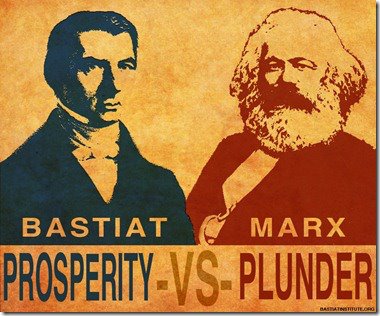
Since people of different ages, medical conditions, pre-existing situations, etc have different anticipated costs, the purpose of an individual mandate has nothing to do with getting people to buy their own insurance. It is the forcing of individuals to buy into a system that makes people pay for medical treatments that are not theirs, support welfare, and overpay for services in order to create a coverage that is similar for all person. That is legal plunder and anti free-market. The health care industry would best serve our citizens if Obama Care and the individual mandate was rescinded and if it restructured health insurance as a ‘true insurance’.
by | ECONOMY, OBAMACARE, POLITICS, TAXES
FLASHBACK: Don’t forget that the House voted to repeal the Medical Device Tax on June 7, 2012 with “H.R. 436, the Protect Medical Innovation Act of 2012”. The Senate never did — not then, not now. Who’s looking out for businesses? See my post from June 2012:
This little-talked about tax seems to be absent from news coverage. Are media outlets are avoiding discussion of Obamacare items in advance of the Supreme Court ruling expected later this month? In case you missed it, on June 7th, the House voted 270-146 to repeal the medical excise tax. The bill must now pass the Senate, where current speculation is that it will not pass.
What is the medical excise tax? Medical device manufacturers employ 360,000 people in 6000 plants across the country. This law imposes a new 2.3% excise tax. It exempts items retailing for <$100. [Bill: PPACA; Page: 1,980-1,986]
Many are ardently opposed to the new tax, and rightfully so. As an excise tax, it taxes gross sales – even if the device company doesn't turn a profit that year. Note: this tax is one of many slated to go into effect January 2013.
As a revenue raiser, its impact is nominal. The government speculates it could raise $20-$30 billion. Though that sounds like a lot to you and me, it's a drop in the bucket in terms of government revenue.
Furthermore, from an business perspective for the companies subject to this tax, the extra resources needed to comply will be burdensome for companies. Price changes and paperwork will take time and manpower away from the company's main purpose -- to produce a product -- in order to handle this new regulation.
From a common sense perspective, why would the federal government want to make medical devices -- which save lives -- more expensive? Will the Senate support small businesses and repeal an unnecessary, expensive, and burdonsome tax? The House has done so. The Senate should follow suit.